Skip to content
Morning sunlight filters through misty trees beside a narrow grassy path

Climate Action Across Our Value Chain

  • 95% Emission Reduction in Scope 1 & 2 - from a baseline of 2015

  • 97% Renewable energy (solar, biomass, thermal, IREC)

  • 5.1 MW solar

The Problem: Why Climate Action Can’t Wait

The Problem: Why Climate Action Can’t Wait

Pakistan is among the countries most vulnerable to the impacts of climate change. From increasingly unpredictable monsoons and prolonged heatwaves to floods that affect millions of lives, climate change is no longer a future risk - it is part of our present reality. In a country where agriculture and manufacturing are central to livelihoods and economic growth, climate action is not only an environmental priority; it is critical to food security, community resilience and business continuity.

At Unilever, we believe businesses of our scale have both the responsibility and the ability to help drive meaningful climate action. We are committed to using our reach, resources and influence to accelerate progress - within our own operations and across the wider value chain.

What Exactly Are We Reducing?

What Exactly Are We Reducing?

Sustainability reports frequently reference terms such as "Scope 1" and "Scope 2" emissions. These are internationally recognized classifications used to measure and report a company's greenhouse gas emissions.

  • Scope 1 & 2 emissions are the pollution created directly by our own operations, the fuel burned in our factories, and the electricity and gas we use to run our sites and offices. These are the emissions within our direct control.

Reducing Scope 1 and 2 emissions is where climate action becomes most tangible, because it begins with the choices we make within our own operations - from the energy we use to power our factories to the way we run our sites every day.

The Solution: What Unilever Pakistan Has Actually Done

Here's the real, measurable progress we've made in Pakistan: Cleaner factories, real numbers

Since 2015, Unilever Pakistan has reduced CO₂ emissions per tonne of production by 95%, demonstrating that lowering our environmental footprint and building a more resilient, competitive business can go hand in hand. Today, 97% of the energy used across our operations comes from renewable sources - reflecting our commitment to accelerating the transition to cleaner energy at scale.

Clean Energy Factories

Clean Energy Factories

Our flagship factory in Rahim Yar Khan now meets 97% of its energy needs through renewable sources, combining on-site solar power with biomass generation. Built with sustainability at its core, the facility demonstrates how clean energy can drive efficient, large-scale manufacturing while significantly reducing environmental impact.

Championing Renewable Energy through partnerships

Championing Renewable Energy through partnerships

Through our partnership with K-Solar, Unilever Pakistan is generating approximately 2.3 million kWh of renewable electricity annually, reducing both energy costs and carbon emissions. This transition delivers annual savings of nearly PKR 84 million, demonstrating how sustainability and business value can go hand in hand.

At our Futehally Chemicals facility, which manufactures Surf Excel, a dedicated solar installation generates nearly 496,000 kWh of clean energy each year, saving around PKR 18 million and avoiding approximately 233 metric tonnes of CO₂ emissions annually.

Our efforts extend beyond our operations. By introducing electric vehicles into our distribution network and collaborating with suppliers to reduce emissions across the value chain, we are helping accelerate the transition to a lower-carbon future.

Read more

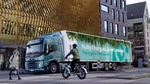
An electric truck with 'Fully Charged. Zero Emission. This truck is 100% electric.' written on its side, driving through a modern urban area with a cyclist and a pedestrian nearby, and contemporary buildings in the background.

Electrifying our future

Over the long term, we’ll be moving to electric or hydrogen-fuelled trucks.

We’ve already scaled up the use of electric vehicles in Greater Asia, Greater China and Latin America, as well as Pakistan, Turkey, Arabia and Bangladesh (PTAB).

Climate Resilience

Following the devastating floods in Pakistan, Unilever Pakistan partnered with local communities to support the rehabilitation of Essa Rajhero village in Thatta. Moving beyond emergency relief, the initiative focused on restoring livelihoods, strengthening community resilience, and improving access to essential resources. The project reflects our commitment to creating lasting social impact and helping communities recover stronger, while building a more resilient future for those most affected by climate-related challenges.

Why This Matters? For Pakistan and For Unilever

At Unilever Pakistan, sustainability is not just about reducing impact, it is about creating lasting value. By investing in renewable energy, improving resource efficiency, and accelerating decarbonisation across our operations and value chain, we are helping build a business that is fit for the future.

As the company behind some of Pakistan's most trusted brands, we are committed to contributing to a cleaner, more resilient, and more sustainable Pakistan for generations to come.

Our other sustainability priorities

A winding river flows between dense green fields and tall trees in bright afternoon light.

Nature

Pakistan is one of the most water-stressed countries in the world. Unilever Pakistan's Water Stewardship Program is working to replenish 192.5 million litres of water every year, through watercourse lining, recharge wells, and community awareness on responsible water use.

Workers sort mixed plastic waste into large color-coded bins at a recycling facility

Plastics

A wrapper can only be recycled if someone actually collects, and for packaging to be reusable and recyclable, effective collection and processing systems must exist first. We're investing in that collection system so plastic stays in use, not in the ocean or a landfill.

Older man sits outdoors reading a newspaper beside a water cooler and plastic cup.

Livelihoods

What started as support during COVID has grown into a bigger commitment, helping improve the lives of over 21,000 people connected to Unilever Pakistan, from our employees to the wider people in our value chain.

Back to top